

Systems Proceed
Before The House
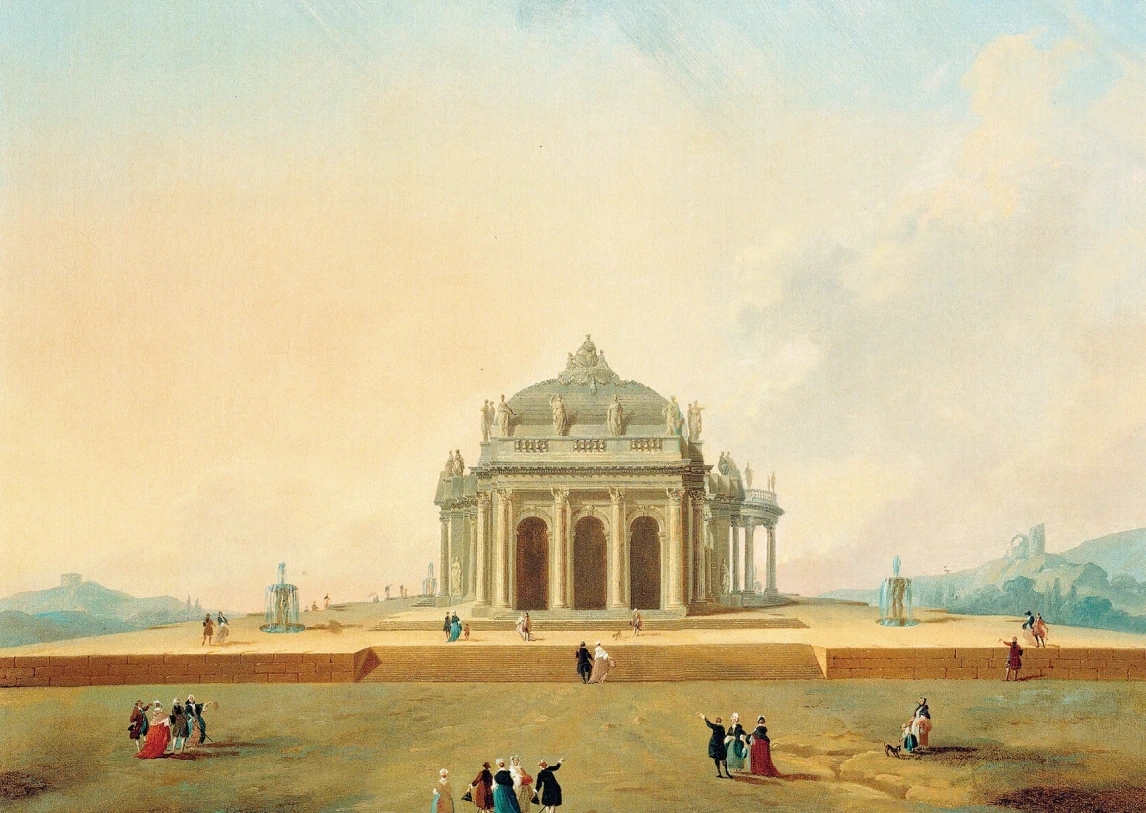
Every financial institution is a tenant of a system older than itself. The ledger it keeps, the credit it extends, the market it quotes into — each is an inheritance, refined across seven centuries by people solving one permanent problem: how strangers can trust each other with value across distance and time. The House reads this history professionally, because its daily work — designing financial systems — is the current chapter of it.

The Foundation
Of The Ledger
Modern finance begins with an act of record-keeping. In the city-states of Renaissance Italy, merchant families developed double-entry bookkeeping, the bill of exchange, and correspondent networks that let value move between cities without coin moving between them. The deep innovation was abstraction: wealth became an entry, trust became a document, and a merchant's book became something a stranger could rely upon. Every system the House designs still rests on that foundation — the authoritative record, kept so well that others can build on it.
THE EVOLUTION
The Age Of The Market
In Amsterdam and then London, the seventeenth and eighteenth centuries assembled the next layer: the joint-stock company, the public exchange, marine insurance, and the government bond. Capital became divisible, transferable, and priced continuously — and with that came the first bubbles, the first crashes, and the first hard lesson that markets manufacture euphoria as efficiently as they manufacture liquidity.
The exchange floor of that era is the direct ancestor of every venue and platform the House works with today.
The Architecture
Of Infrastructure
The most recent chapter is the one the House inhabits: finance as engineered infrastructure. In two generations, the floor became a server, the ledger became a database, settlement compressed from weeks toward moments, and the institution itself became an assembly of platforms, connectivity, custody, and controls, orchestrated rather than owned. This is the age that made X-CHASE's discipline necessary: when an institution is an architecture of systems, someone must be the architect.
PRECEPT ASSEMBLY
The instruments are new in every century. The problem has never changed once.