

HERITAGE
HERITAGE
Before Building, Inherit
Heritage, for most firms, is a page about themselves. For X-CHASE it is something older and more demanding: the tradition of institution-building itself – centuries of financial houses that endured, the systems they created, and the disciplines that carried them across generations.
The House is young. The tradition it has chosen to answer to is not. This section is an account of both the heritage the House studies, and the heritage it has begun to write.


A Deliberate Claim
Let the claim be stated precisely, because precision is the first discipline of this House. X-CHASE does not claim the age of the great houses, nor kinship with them, nor any standing beside them. It claims something available to any institution willing to pay for it: apprenticeship.
The enduring houses of finance left a curriculum in their structures, their conduct, their failures, and their survivals – and that curriculum is public property for whoever takes it seriously. The House has taken it seriously. What follows is the syllabus.
The Four Chambers of Heritage
The Heritage of the House is arranged into four chambers. Each stands as an independent study: of the institutions that have lasted, of the instruments they were built from, of what the record says about endurance, and of the standards this House has chosen to build by.
A small number of houses in Europe and Asia have been in continuous operation for three centuries and more. They did not last by being the largest, the fastest, or the most inventive; several were none of those things, and some of the most inventive institutions of every era are no longer with us. They lasted by declining a particular kind of business, by holding capital against events they could not forecast, and by treating the passage of the firm from one generation to the next as the principal engineering problem of the enterprise rather than a matter to be settled later.
The House studies them as engineering and not as romance. What was structurally true of an institution that saw out four centuries, what was true of one that did not see out a decade, and which of those differences can be designed into a firm at its founding rather than hoped for afterwards.
Every instrument in modern finance was once an object a person could hold. A notched rod that two parties broke in half, each keeping the half that proved the other. A folded letter that moved value between cities without moving a single coin. A bench in a square, and the word we still use for the day it was broken.
The apparatus a principal operates today is the accumulated residue of those objects. It is not possible to design a financial institution well while treating its parts as though they had no history, because the constraints that shaped them are in most cases still in force — the settlement cycle, the custody chain, the separation of the person who holds the asset from the person who instructs its movement. Each was a solution to a specific failure, and each will behave as such under pressure.
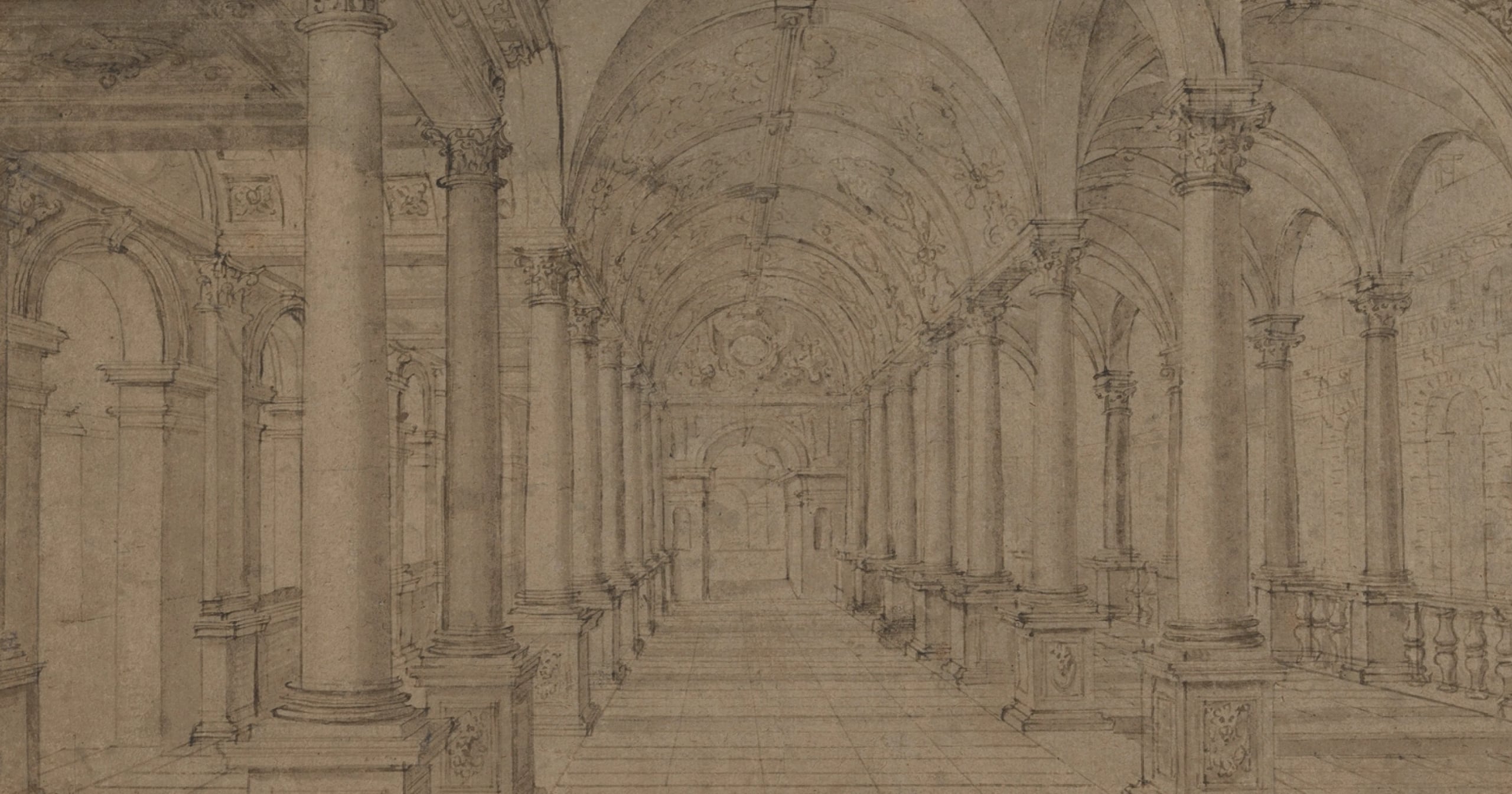
This chamber holds the standing exhibition of the House, The Long Gallery: eleven rooms, in three wings.
Endurance is not the same thing as caution, and the historical record does not reward the merely careful. What it rewards is an institution that has decided in advance which business it will not write, and that has arranged its capital so the decision can survive a period in which the declined business is visibly profitable to everyone else in the room. That period is the whole test. Almost every failure in the record is a firm that held its line until the line became expensive.
The lessons are therefore less about foresight than about pre-commitment. What is written down before the pressure arrives, who holds the authority to enforce it when it does, and whether that person can be overruled by the people the business is making money for. A governance framework that has never cost the firm a transaction has not yet been tested.
X-CHASE designs institutions for principals who intend them to outlast the people who commissioned them. That intention settles everything downstream of it. Structures are drawn to be governed rather than merely operated. Providers are selected on the assumption that each will one day be replaced, and the architecture is arranged so that replacing one does not require rebuilding the institution around it. Documentation is written for the person who will inherit the system, not for the person who is buying it.
The House charges for design, always and in advance, because a design given away is a design for which nobody is accountable. It declines work it cannot execute to standard, and it says so plainly rather than accepting the mandate and managing expectations afterwards. The discipline to decline is not modesty. It is the difference between a House and a firm.
PHASED ASSEMBLY
"Tradition is not what a house inherits. It is what a house agrees to be measured by."