

THE FRAMEWORK · THE STANDARDS OF THE HOUSE · STUDY NO. 02
The Inheritance
Eleven lessons the old banking houses offer the design, launch and management of financial institutions — what they refused in order to last, and what the House asks of the institutions it designs.
THE FRAMEWORK · STANDARDS

STUDY NO. 02
Abstract
A house is not old because nothing happened to it. It is old because of what it refused. The refusals are documented, they are repeatable, and they are the subject of this Standard.
Five institutions examined in the pages that follow have traded continuously for more than three centuries; one of them has been open since the reign of Lorenzo de’ Medici. They did not survive because their markets were gentle. Every one of them lived through wars, occupations, currency collapses, bank runs, confiscations, and at least one generation of its own family that should probably not have been given the keys.
What instructs is not that they endured. It is what each gave up in order to endure. Every one of them declined, at a specific and documented moment, something that a competent adviser of the day would have told it to accept: scale, limited liability, a wider client base, a faster market, liquidity of ownership, or simply a very good price for the name over the door. Those refusals were not sentimental. They were structural decisions, taken early, and they are the reason the houses are still legible today while thousands of their contemporaries are not.
X-CHASE is a firm of years, not of centuries, and this Standard makes no claim otherwise. It makes a narrower and more useful claim: that the practices which allowed these houses to last are not the private property of families, are not a function of age, and are available to any institution prepared to adopt them deliberately at the beginning rather than discover them by loss.
Eleven of those practices are set out here. Each is stated first as an observation about a named house, then as a lesson, and then twice more — once as an obligation the House imposes on itself, and once as a requirement the House puts to the principal whose institution it is designing. The second is the point. A design firm that recommends a discipline it does not practice is selling a document; a design firm that practices a discipline it does not require of its clients is selling a decoration.
Eleven was not chosen for symmetry. It is the number of practices that appear in every one of the surviving houses examined, in different centuries and under different legal systems, without any of them having copied the others. Practices found in only one or two — and there are many, some of them famous — are omitted here, because a habit that one house survived with is not evidence that the habit was the reason.
Definition · The Three Inheritances
Structure — how ownership, liability, and succession are arranged. Fixed at founding and almost never revised except under duress. It determines who is awake at three in the morning.
Conduct — what the house does at the moment the profitable course and the correct course separate. Tested continuously, recorded permanently, and visible to counterparties long before it is visible to regulators.
Time — the unit in which the house measures itself. The oldest houses count in generations; the newest count in quarters. Nothing else about them differs so completely, and nothing else explains so much.
An institution is the sum of what it declined.
Exhibit · The Course of the Standard
- IWhy the House Studies the Old HousesPart One · The Gallery
- IIThe Long GalleryPart One · The Gallery
- IIIHow a House Is ReadPart One · The Gallery
- ILiability Must Be PersonalPart Two · Structure
- IICharacter Is Examined Before CollateralPart Two · Structure
- IIIRefusal Is a StrategyPart Two · Structure
- IVSeparate the Capital Before You Need ToPart Two · Structure
- VThe Written Record Is the InstitutionPart Two · Conduct
- VIDiscretion, And The Size A House ChoosesPart Two · Conduct
- VIIThe House Is a PlacePart Two · Conduct
- VIIIIndependence Is Bought by Not SellingPart Two · Conduct
- IXSuccession Is the Risk That Ends HousesPart Two · Time
- XTime Is the Unit of MeasurementPart Two · Time
- XIThe House Is Built for Those Who Come AfterPart Two · Time
- XIIThe Two Houses That EndedPart Three · The Counter-Lesson
- XIIIWhere These Lessons Enter a MandatePart Four · Application
- XIVWhat the House InheritsPart Four · The Doctrine
Why the House Studies the Old Houses
PLATE I · THE DOOR AT SIENA
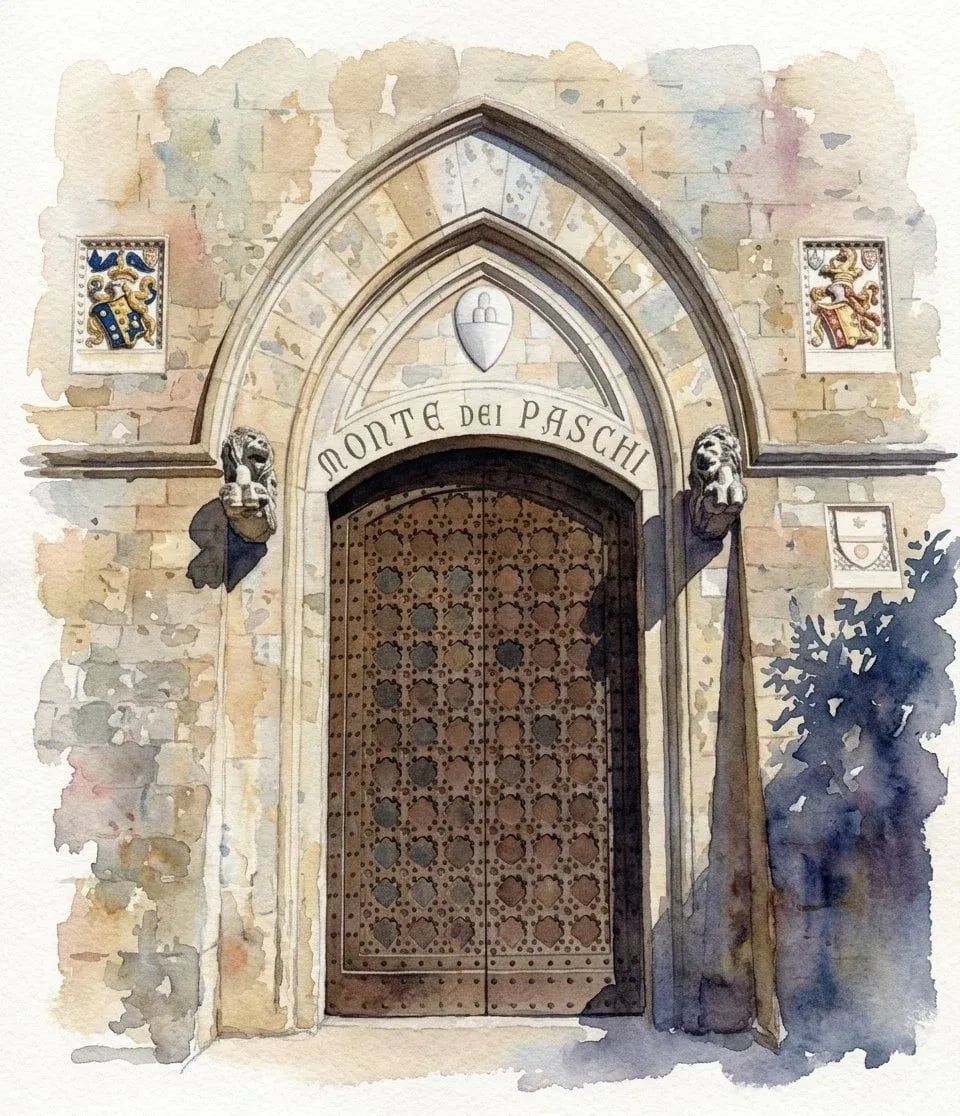
The trade press studies the newest firms, because novelty is what it is paid to report. The House studies the oldest, for a reason that is methodological rather than romantic. Every governance framework in circulation today is a hypothesis about what will hold. These houses are the completed experiment. They are the only long-run evidence available of an institutional design that has actually been run — through the whole of the modern financial era, in real weather, with real money.
The sample is short and it should be read as short. Monte dei Paschi opened at Siena in 1472 as a charitable mount of lending and is still trading. Berenberg has operated at Hamburg since 1590, founded by two brothers who arrived as Protestant refugees from Antwerp. Hoare’s has traded in London since 1672 and at the same Fleet Street address since 1690. Metzler began at Frankfurt in 1674 as a cloth business. Rahn+Bodmer opened at Zurich in 1750 as a silk-trading house and found that its side business in bills of exchange was the better trade.
Two features of that list matter more than the dates. The first is that almost none of them began as a bank. They were goldsmiths, cloth merchants, silk traders, and charitable lenders who were trusted with money because they were already trusted with goods, and who became financial institutions by accretion. Credit followed reputation; it did not precede it. The second is the brevity of the list itself. Thousands of houses were founded alongside these, on comparable capital, in the same streets, and are gone without a trace. Survivorship here is not a bias to be corrected for. It is the measurement.
Note also what the list does not contain. There are no houses in it that grew fastest in their generation, none that were the most profitable in their city, and none that were admired for their innovations. The institutions that held those distinctions were, almost without exception, absorbed or wound up within a century of holding them. Longevity and pre-eminence are not the same prize, and the houses in this Standard are cited only for the first.
The method that follows is therefore comparative rather than admiring. Where a practice appears in one house it is noted; where it appears in all of them, in different centuries and different legal systems, it is treated as a finding.
A Caution Before the Argument Begins
The House does not present these institutions as faultless, and this Standard is not a hagiography. Several have had bad centuries. Monte dei Paschi’s modern record includes severe losses and state recapitalization; the London private banks of the nineteenth century produced embezzlements and family quarrels that would close a firm today. Age confers no immunity, and Section XII is devoted to a house that had every inheritance described here and failed anyway in a single week. What the old houses offer is not a record of virtue. It is a record of which structures absorbed error and which did not. Nor were their conditions gentler than ours: they traded without limited liability, without deposit insurance, and for most of their lives without a lender of last resort.
The Long Gallery
PLATE II · MITSUI

The Source of the Plates
The houses examined in this Standard are the houses hung in The Long Gallery, the permanent exhibition of the House — fifty-seven plates in eleven rooms, in three wings, recording the objects, the systems and the people through which capital has passed since a table in the Athenian agora. The two rooms that concern this document are the last two.
Room X, The Sitters holds fourteen faces: Cosimo de’ Medici and Jacob Fugger, who assembled the machinery; William Paterson and John Law, who proposed two structures on one vision, of which one survived; Nathan Mayer Rothschild, George Peabody and Jay Cooke; Walter Bagehot, who wrote the rule; Hetty Green, who was liquid when nobody else was; J. P. Morgan, who was the lender of last resort before a central bank was; Siegmund Warburg, Paul Volcker, Muriel Siebert and Ray Dalio.
Room XI, The Houses holds fourteen institutions, hung in the order they were founded, from 1472 to 1995. Twelve are still trading; two are not. That ratio is the subject of this Standard, and the room states its own governing sentence plainly: it hangs there because the mechanism by which a house outlives its founders — or fails to — is what the room is about.
A Note the House Takes from Its Own Gallery
Room XI closes on a roll of nine marks invented for the exhibition rather than reproduced from any house’s arms, and the plate says why: a real archive distinguishes what it holds from what it merely references. None of the fourteen houses has any connection to X-CHASE, none has endorsed anything, and no house device is depicted anywhere in the gallery or in this Standard. That distinction is itself Lesson V of this document, applied to the House before it is asked of anyone else.
Every plate reproduced in the pages that follow carries its gallery reference beneath it, and every sitter and every house is named. Where a plate depicts premises rather than a person, or no identified individual at all, the apparatus at the end of this Standard says so.
Exhibit 1 — The Register of the Houses
| Seat · From · Form | Cited for | |
|---|---|---|
| Monte dei Paschi di Siena | Siena · 1472 · Municipal foundation; today listed | Outlives every family and state that founded it — survival is not health |
| Berenberg | Hamburg · 1590 · Liable partners; one family, continuous descent | The record of who stands behind a signature — Lesson V |
| C. Hoare & Co | London · 1672 · Unlimited liability company; twelve generations | Never took an outside partner — Lesson III |
| Mitsui | Edo · 1673 · Merchant house; latterly a listed group | A posted price treats a stranger as a regular — Lesson II |
| B. Metzler seel. Sohn & Co | Frankfurt · 1674 · Family-owned; liable partners inside and out | Ownership closed, management opened |
| Wegelin & Co | St Gallen · 1741–2013 · Partnership, unlimited | Destroyed by a policy the partnership stood behind — Section XII |
| Rahn+Bodmer Co | Zurich · 1750 · Partners liable without limit | The seat outlives trade, names and currency — Lesson VII |
| Barings | London · 1762–1995 · Merchant bank; latterly with a securities arm | Age confers nothing without an independent control — Section XII |
| Lombard Odier | Geneva · 1796 · Partnership; converted this century | The institution was the deed, not the name — Lesson XI |
| Rothschild | Frankfurt, then five capitals · 18th c. · Separately capitalized houses, one name | Separation of capital is a risk control — Lesson IV |
| Pictet | Geneva · 1805 · Share neither inherited nor bought | Longevity as a written constraint on ownership — Lesson IX |
| Brown Brothers Harriman | New York · 1818 · Unlimited partnership; deposits uninsured | Personal liability travels across the Atlantic — Lesson I |
| Mirabaud | Geneva · 1819 · Seven generations; converted this century | A change of form changes who loses first — Lesson X |
| Bordier & Cie | Geneva · 1844 · Partnership; still liable without limit | A structure becomes a position when rivals abandon it — Lesson I |
| E. Gutzwiller & Cie | Basel · 1886 · Unlimited partnership; deliberately small | Maximum size decided in advance — Lesson VI |
| Julius Bär | Zurich · 1890 · Listed; neither converted nor absorbed | The choice to remain, taken again each generation — Lesson VIII |
| J.P. Morgan & Co | New York · 19th c. · Private partnership; later incorporated | Credit extended to character, stated under oath — Lesson II |
Source: Room XI and Room X of The Long Gallery (Exhibition XC·LG·EX-01), and the published record of each institution. Forms are those prevailing at the date of publication and are subject to change. No association, endorsement or relationship with X-CHASE is stated or implied.
Room XI of The Long Gallery: fourteen houses, in the order they were founded, and what each is cited for. Almost every entry is cited for something the house did to its own ownership, liability or succession — a decision taken about itself rather than about a market, and settled at the beginning. That is the finding rather than an artifact of selection: the market did to all of them, more or less, the same things. Two of the seventeen are cited for failures, and both of those are examined in Section XII.
Note what the register does not contain. There are no houses here that grew fastest in their generation, none that were the most profitable in their city, and none admired for innovation. The institutions holding those distinctions were, almost without exception, absorbed or wound up within a century of holding them.
How a House Is Read
A house cannot be assessed by its balance sheet alone, because a balance sheet describes a moment and these institutions are assessed over centuries. Nor can it be assessed by its reputation, which is a lagging indicator maintained by people with an interest in it. The House reads an institution on the three planes named in the Abstract, and the reading takes the form of nine questions.
Exhibit 2 — The Nine Questions
The reading applied to the old houses in this Standard, and to every institution X-CHASE designs
- 1Who is personally exposed when the house is wrong?Structure
- 2Who may become an owner, and on whose decision?Structure
- 3What happens to the house when the founder stops?Structure
- 4What has the house declined, and is the refusal written down?Conduct
- 5Where does its revenue come from when the client loses?Conduct
- 6Who inside the house may say no to the person who earns?Conduct
- 7Over what horizon is performance actually measured?Time
- 8Is the record kept in documents or in people?Time
- 9Is the institution being built to hold or to sell?Time
Every one of the nine can be answered on the day a firm is incorporated, and almost none of them can be answered honestly for the first time in year five. That asymmetry is why the old houses are useful to a firm that designs new ones: the questions they answered at their founding are the questions a principal is answering now, usually without noticing that a permanent answer is being given.
The eleven lessons that follow are grouped in the order of the planes. Lessons I to IV concern structure; V to VIII concern conduct; IX to XI concern time. Each closes with two obligations, because the House holds that a standard recommended to a client and not imposed on the recommender is worth precisely nothing.
How the Nine Questions Are Used in a Mandate
At design, they are put to the principal, and the answers are written into the architecture rather than left to be settled by the first vendor contract. At launch, they are put to every counterparty under consideration — liquidity, technology, banking, introducing — on the House position that a counterparty which cannot answer them is a dependency rather than a partner. Under a management mandate they are re-asked annually, because the answers drift: the founder who was personally exposed at incorporation is frequently not exposed by year three, and nobody records the moment at which that changed.
A firm can be described by what it earns. It can only be understood by what it cannot do.
Liability Must Be Personal
PLATE III · BORDIER & CIE
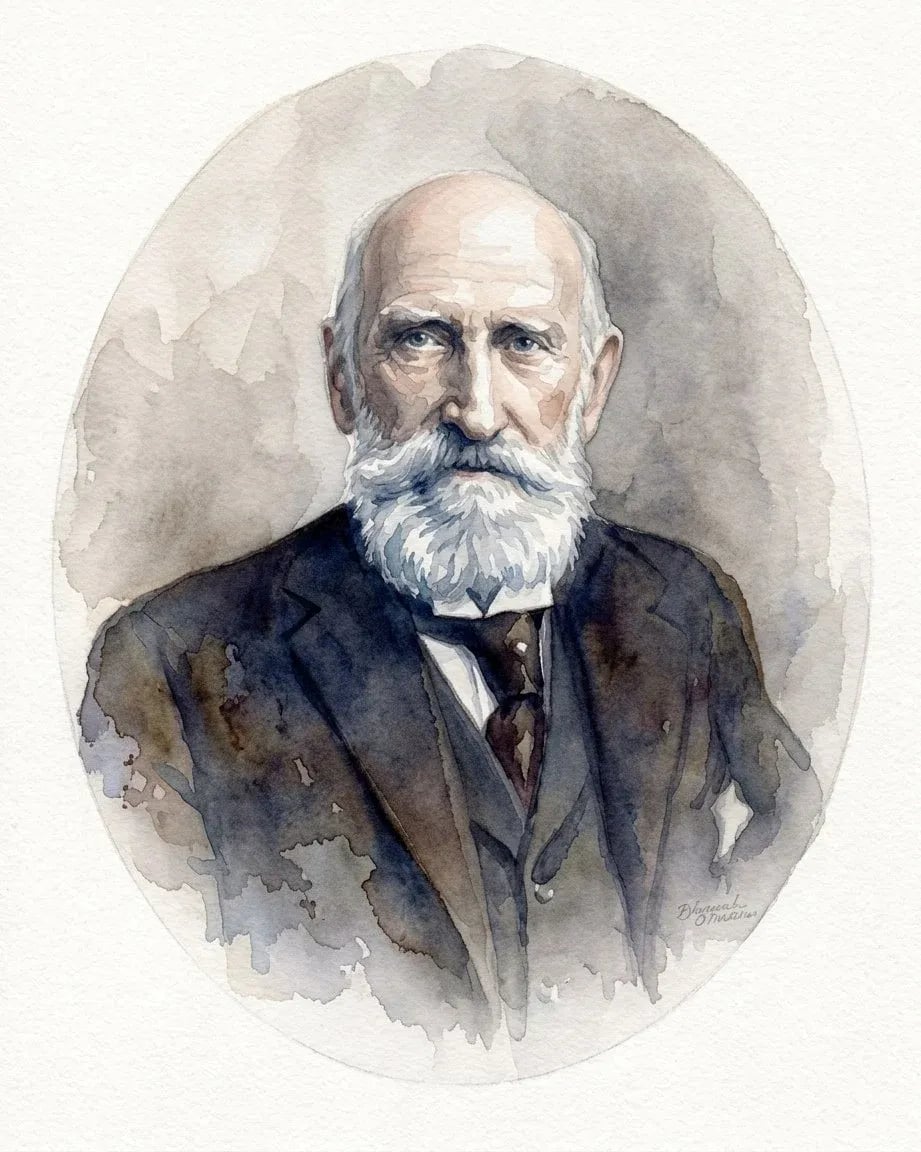
PLATE III · BROWN BROTHERS HARRIMAN

The Evidence
Bordier & Cie has been run by the family that founded it at Geneva in 1844, into a seventh generation, and where its neighbours converted to corporate form it remained a partnership in which the partners are liable without limit — a position the firm treats as its principal statement about itself rather than as a legacy inconvenience. Brown Brothers Harriman, which dates itself from 1818, reached the same structure independently and holds it still: an unlimited-liability partnership among some forty partners, with deposits uninsured by design. Rahn+Bodmer at Zurich is one of the last Swiss houses of which the same is true. Berenberg has admitted fewer than forty personally liable partners in four centuries. And when Hoare’s reorganized in 1929 it became not a limited company but an unlimited one.
The Lesson
Risk is governed by the person who cannot walk away from it. No committee, no policy manual and no framework yet written produces the caution produced by an owner whose own house is pledged against the firm’s obligations. These houses did not copy one another — they are separated by oceans and centuries — and they converge on the same legal form anyway.
The modern corporate form exists to sever that link, and there are legitimate reasons for it. But the severance has a cost rarely priced at incorporation: once no one is personally exposed, the discipline must be manufactured elsewhere, in writing, with independence, and at expense — and maintained by people who are not exposed either. Note also what Bordier demonstrates about positioning: a structure becomes a market position the moment competitors abandon it, and what was ordinary in 1844 is now the whole differentiation without a word of marketing.
The oldest houses in Europe and the oldest in America are the ones whose owners could not be separated from their mistakes.
What the House takes
Every deliverable of the House carries a named author and a named reviewer. Mandates are not issued in the name of the firm alone; a member of the Management Committee signs the architecture and remains attached to it through launch and into management. Anonymous work product is not permitted, because a document nobody signs is a document nobody defends.
What the House asks of the client
That the client’s institution place its risk decisions with a person exposed to their consequences, and that the exposure be documented in the shareholders’ agreement rather than assumed. Where limited liability is unavoidable — and it usually is — the manufactured substitute is the independent risk function of Study No. 05: a control that does not report to the desk it constrains.
Character Is Examined Before Collateral
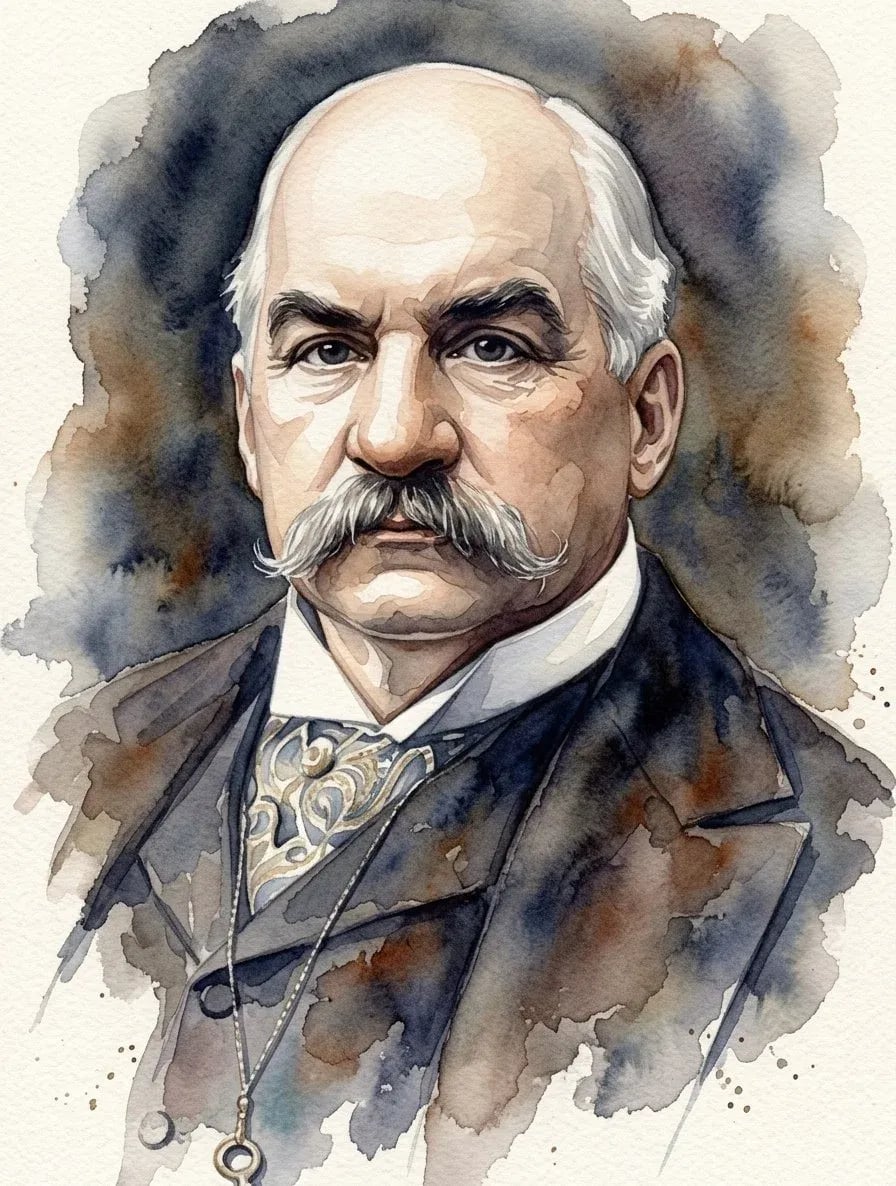
PLATE IV · J. P. MORGAN
The Evidence
In December 1912, before a subcommittee of the United States House of Representatives investigating the concentration of money and credit, counsel put it to the most powerful private banker in America that commercial credit rests upon money or property. The answer was that “the first thing is character.” Pressed, he placed it ahead of money and everything else, and observed that money could not buy it.
The same proposition had been written into a shop front in Edo two hundred and forty years earlier. Mitsui Takatoshi opened the Echigoya store in 1673 on a principle that scandalized the trade: fixed prices, posted openly, cash only, no haggling, and no credit extended on reputation alone. Competitors sold to whoever they favoured, on terms settled by negotiation and rank.
The Lesson
Credit, as Study No. 05 established, is a permission rather than a service, and permissions are granted to counterparties rather than to collateral. Collateral is what a lender falls back on when the first judgment was wrong; it is the remedy, not the test. A house that has inverted the two has not made itself safer — it has moved the point of failure to where recovery is slowest and most public.
The Mitsui half of the lesson is the harder one, because it runs in the other direction. A fixed, posted price is a promise that the house will treat a stranger exactly as it treats a regular, and it is the single hardest promise for any institution to keep at scale. Character is examined in both directions or it is not a standard; it is a preference exercised by the stronger party.
What the House takes
Counterparty and client selection precede commercial terms in every mandate. The House maintains the right to decline — a mandate, an introducer, a jurisdiction, a vendor — and treats that right as a commercial asset rather than as revenue foregone. Terms are the same for a first engagement as for a fifth.
What the House asks of the client
That the client’s onboarding standard, introducer classes and counterparty selection be written as character tests before they are written as price tests, and that the firm retain, in writing, the authority to refuse business it is legally entitled to accept. An institution that has never declined a client cannot demonstrate that it selects them.
Refusal Is a Strategy
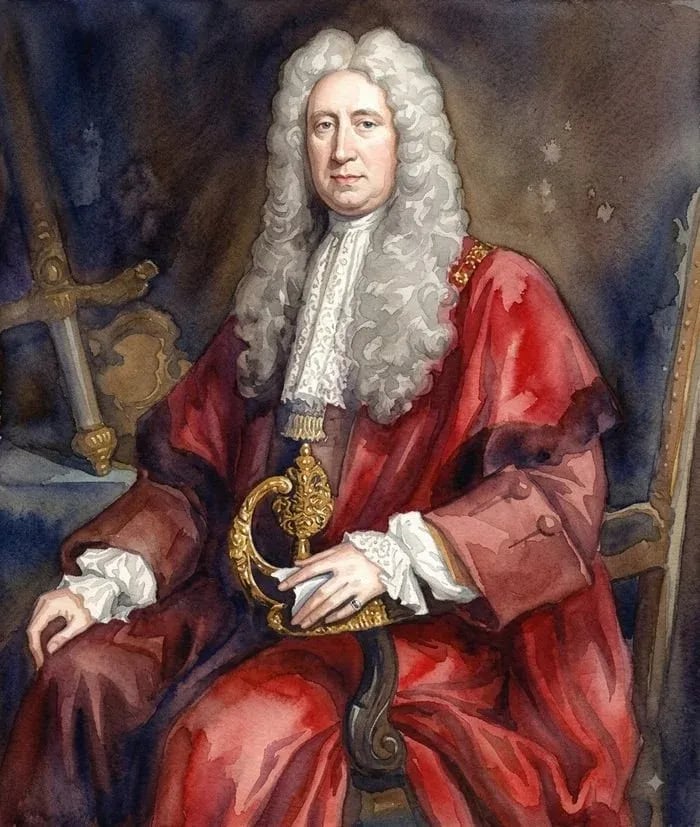
PLATE V · SIR RICHARD HOARE
The Evidence
Richard Hoare was apprenticed to a goldsmith in 1665, the year the plague emptied London, and took his freedom of the Goldsmiths’ Company in 1672 — the date his bank counts as its founding. He kept coin and plate safe for a fee, and the safekeeping became the business. The house he founded has never taken an outside partner; every partner today is his direct descendant, twelve generations on.
That is a refusal repeated, not a fact of history. In the decades either side of the First World War the London private banks were sold, one after another, for good reasons: Goslings into the merger that formed Barclays in 1896; Coutts to the National Provincial in 1920; Child & Co, founded 1664, in 1924; Drummonds, trading since 1717, to the Royal Bank of Scotland the same year. Hoare’s is the only one of them independent today, and the decision was taken by a generation that could not have known it would be vindicated.
The Lesson
The industry treats a declined transaction as a cost and a closed one as a result, which is why so many institutions cannot describe the business they will not write. But the houses in this Standard are defined more precisely by their refusals than by their transactions, and the refusals are of a particular kind: they are refusals of the most profitable thing available at the time.
Study No. 05 observed the same in a living structure: the private house could lawfully take the other side of its clients’ flow, and declines, because the whole relationship rests on the client’s belief that the house is not his counterparty.
A house is remembered for its transactions and it survives on its refusals.
What the House takes
The Three Prohibitions are absolute and are stated in every instrument the House publishes: client capital never passes through X-CHASE; the House holds no custody; and it guarantees neither returns nor regulatory outcomes. To these is added a fourth discipline — the House holds no economic interest in which vendors a client selects, and declines mandates in which such an interest would arise.
What the House asks of the client
That the institution name, in advance and in writing, the business it will not accept: the flow it will not internalize, the jurisdictions it will not solicit, the introducer arrangements it will not enter, the client types it will not onboard. A prohibition written before the revenue is offered is a policy. One written afterwards is an apology.
Separate the Capital Before You Need To
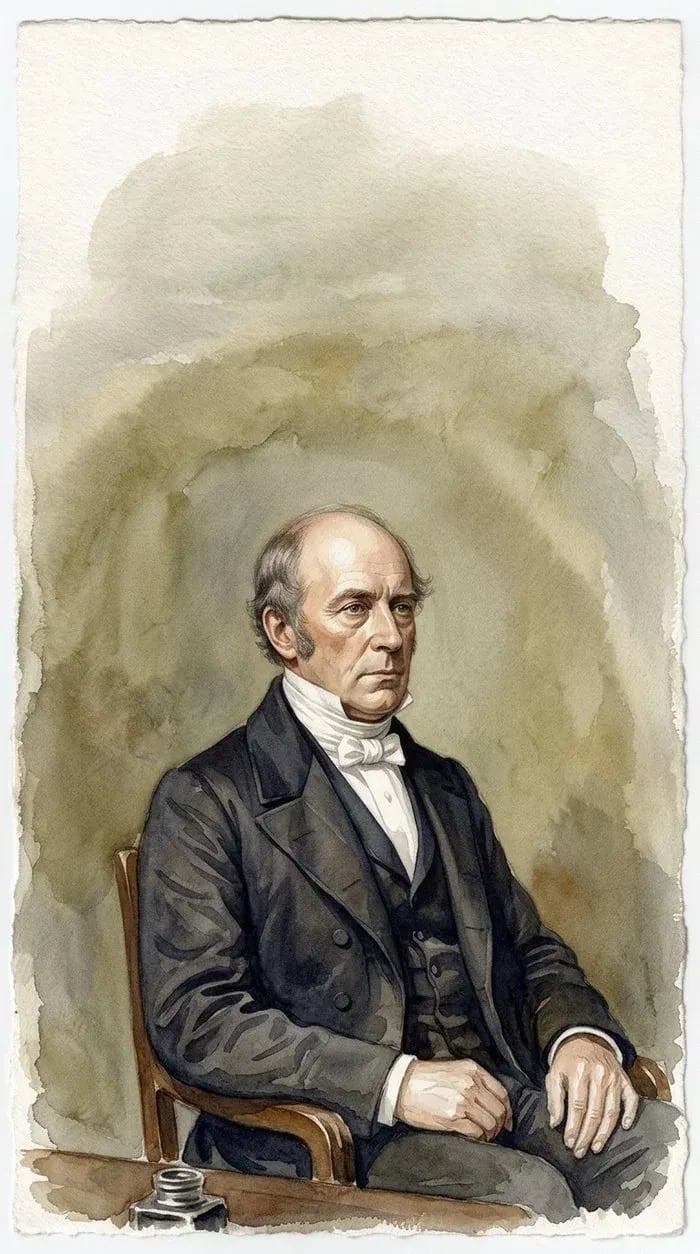
PLATE VI · NATHAN MAYER ROTHSCHILD
The Evidence
The most consequential structural invention in the history of private banking was not an instrument. It was an arrangement of entities. From a single counting house at Frankfurt, the Rothschild family established separate houses at London, Paris, Vienna and Naples — each capitalized in its own right, each subject to its own sovereign, its own currency and its own law, and each able to trade with the others as a counterparty rather than as a branch. Nathan, the London brother, is the one the Gallery hangs, and the caption is the point: the network’s commercial advantage was information, but its structural advantage was insulation.
The Lesson
Separation of capital is a risk control, not a matter of prestige or tax. A single entity holding every activity of a house transmits any failure in any activity to all the others instantaneously and without a decision being taken. Separate entities require the failure to travel — through a guarantee, an intercompany loan, a shared licence or a common counterparty — and each of those channels is a thing that can be examined, capped and refused in advance.
Study No. 05 reached the same conclusion from the opposite direction, observing that every large operator in this industry is organized as a group: an institutional entity holding the liquidity and credit relationships, a distribution entity, and separate licensed entities isolating regulatory risk by market. That is containment, and it is the one lesson here that becomes more expensive the longer it is deferred, because capital is easy to separate before it is deployed and very difficult afterwards.
Five houses under one name survived what one house under one name would not have.
What the House takes
The House keeps its mandates, its published doctrine and its proprietary architecture in distinct instruments with distinct ownership, so that a commercial relationship in one cannot become a claim on another. Where a platform of the House is deployed for a partner, it is deployed under a separate name with intellectual property expressly severed in the definitive agreement.
What the House asks of the client
That the institution be drawn as a group at the design stage rather than as a company to be reorganized later: activities separated by risk character, licences held by the entity that performs the activity, intercompany guarantees enumerated and limited, and every channel by which a failure in one entity could reach another identified in writing before the first of them trades.
The Written Record Is the Institution
PLATE VII · BERENBERG

The Evidence
Berenberg has been owned by one family, in continuous descent, since two brothers left Antwerp as Protestant refugees in 1585 with nothing portable but their trade. The Gallery’s note on the plate is the lesson in a sentence: portraiture in a house like this was never decoration but a record of who stood behind the signature on the letter of credit — the closest thing the eighteenth century had to a certificate of good standing.
The habit is general. Hoare’s has kept its ledgers since the seventeenth century and holds the accounts of Pepys, Dryden and Austen in its own archive at Fleet Street. Berenberg numbers its financial years — the four hundred and twenty-eighth, the four hundred and thirtieth — which is a small typographical habit and a large institutional statement.
The Lesson
An institution whose people change every generation cannot keep its judgment in its people. It must keep it in documents: what was decided, by whom, on what evidence and against what objection. This is how a firm in 1930 could be governed by a lesson learned in 1830 without anyone alive remembering the loss that taught it.
The modern equivalent is not a museum. It is the practice Standard No. 01 took from the horological register: every object numbered, nothing destroyed, an extract retrievable a century later. It is a discipline of contemporaneous record — minutes that state reasons rather than outcomes, risk decisions logged at the time with the dissent attached, counterparty files recording why an arrangement was accepted and not merely that it was. A firm that cannot show why it decided cannot defend what it decided, to a regulator, to an acquirer, or to its own successors.
What the House takes
The published record of the House is The Keystone, issued under the Office of Institutional Intelligence and coded by line, type and number so that any instrument can be cited and superseded rather than quietly replaced. Editable source files are retained for every published document. Nothing is issued that the House would not wish read against it in five years.
What the House asks of the client
That minutes, dealing decisions, exception approvals and counterparty acceptances be recorded with their reasons at the time they are taken, and retained under a stated policy. The institution should be able to reconstruct, from documents alone and without recourse to anyone still employed, why it holds every material position and relationship it holds.
Discretion, And The Size A House Chooses
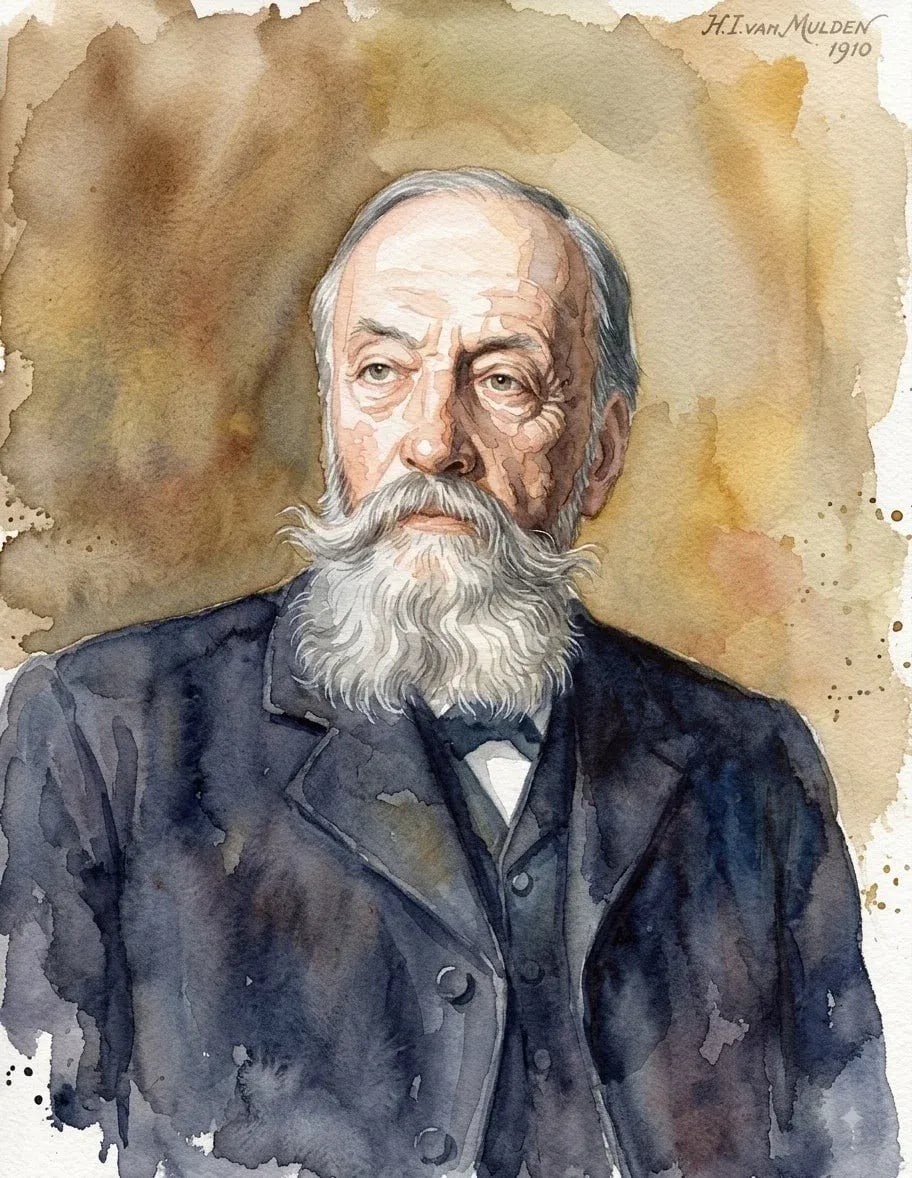
PLATE VIII · E. GUTZWILLER & CIE
The Evidence
Gutzwiller has stayed deliberately small across five generations at Basel, holding to unlimited liability and to a client list it does not attempt to grow quickly. It is the least known of the houses in Room XI, and that is not an accident of fortune; it is the condition it selected. The oldest private houses in Europe are, without exception, the quietest institutions in finance: they do not name clients, do not publish case studies, and several have gone centuries without a public statement about any individual account.
The Lesson
This is usually read as secrecy. It is more precisely a rule about ownership: what the client tells the house belongs to the client, and the house has no licence to spend it. Discretion exercised for the client’s benefit is a service and coexists perfectly with complete transparency toward regulators, auditors and the client himself. Silence maintained for the house’s benefit — about its own economics, its own conflicts, its own counterparties — is opacity wearing discretion’s clothes, and the old houses are poor examples of it: they disclose their form, their liability, their partners and their accounts.
Gutzwiller adds the commercial half. Growth is a choice rather than a duty, and a house that decides its maximum size in advance is making a governance decision — usually the decision that keeps it alive, because a house that cannot decline work cannot keep a standard.
What the House takes
The Disclosure and Access Protocol governs every reference to a named counterparty, client or mandate in any instrument the House publishes. No client is named without written consent; no partner logo is displayed without an executed agreement; no relationship is implied that does not exist. Conversely, the House publishes its own form, its own prohibitions and its own unlicensed status without qualification.
What the House asks of the client
That the institution separate the two categories explicitly in its marketing policy: client information, never used as promotional material, and institutional information — form, conflicts, execution statistics, complaint record — disclosed without being extracted. And that it state, in advance, the size beyond which it does not intend to grow.
The House Is a Place
PLATE IX · RAHN+BODMER CO

The Evidence
In 1750 two Zurich merchants set up a silk-trading business in a building on the Limmatquai known by its sign, the twisted sword. One of them had learned securities and bills of exchange on his travels and carried them on as a sideline; the sideline outgrew the trade. The house appears in the governmental calendar as a bank in 1805 and abandoned goods altogether in the 1850s. The Rahn name enters in 1882, the Bodmer name in 1917, the Bidermann name in 1951. The trade changed, the family names changed, the currency changed; the address did not. Hoare’s has traded at 37 Fleet Street since 1690 on the same principle.
The Lesson
Permanence is partly physical, and the reason is not sentimental. An address that cannot be moved in a weekend is a form of collateral: it says the house can be found, that its principals are resident where its clients are, and that it cannot be dissolved and reconstituted under another name when a difficulty arrives. Counterparties price this even when they do not say so.
The contemporary failure mode is the reverse and common enough to have its own economics. A firm selects a jurisdiction because incorporation is quick and the capital minimum low, discovers that no bank and no payment provider will serve a company of that description, and learns in month nine that it has bought a certificate rather than a seat. Study No. 05 states the correct sequence: establish which counterparties will serve the firm, then select the licence they will accept.
What the House takes
X-CHASE maintains a stated legal seat and a published registered address, and identifies its form, its domicile and its unlicensed status in every instrument it issues. Where the House intends future licensing, the intention is described as an intention.
What the House asks of the client
That the jurisdiction decision be taken as a banking and substance decision rather than a registration decision, and that the institution hold a real seat — offices, resident officers, local records — in at least one jurisdiction its counterparties respect. A letterbox is not a seat, and every counterparty that matters can tell the difference.
Independence Is Bought by Not Selling
PLATE X · JULIUS BÄR

The Evidence
Julius Bär was founded at Zurich in 1890, more than a century after Rahn+Bodmer and three centuries after Wegelin, on the street where it still trades. Of the Swiss and German houses hung in Room XI it is the only one that has neither converted from that tradition nor been absorbed into a larger bank, and it is young enough that the choice is still in front of it: convert, merge, or stay as it is. Metzler has answered the same question one way since 1674; Hoare’s has answered it twelve times.
The Lesson
Ownership structure is a strategic instrument and is used as one by the houses that last. The listed form buys capital and liquidity and sells, in exchange, the horizon — because a listed institution is measured every quarter by people who may hold it for a week. The closed form sacrifices capital and liquidity and buys the ability to make a decision whose payoff is thirty years away.
Neither is superior in the abstract. What is not available is to take the capital and keep the horizon. The error the House sees most often is not a founder who sells too much equity; it is a founder who sells equity without noticing that he has simultaneously sold the tempo of every future decision, and who then attempts to run a generational institution to a quarterly clock.
What the House takes
X-CHASE is closely held and unlisted. Strategic alliances are constituted by contract rather than by equity, with intellectual property separately identified and separately owned, so that a commercial relationship cannot become a claim on the architecture of the House.
What the House asks of the client
That the capitalization plan be read as a governance plan, and that every dilution be assessed for what it does to the decision horizon rather than only for what it does to the cap table. Where outside capital is required, the reserved matters, the board composition and the exit expectations should be negotiated at the first round, while they are still negotiable.
Succession Is the Risk That Ends Houses
PLATE XI · PICTET

The Evidence
On 23 July 1805 two Genevans, both under thirty, signed a partnership deed and opened a house in the old town. It was called De Candolle, Mallet & Cie; the name Pictet did not appear until 1841 and was not the firm’s style until 1926. What has carried it is not the family but the succession rule: a partnership share can be neither inherited nor bought, a partner is admitted only by unanimous vote of the others, and fathers and sons may not serve at the same time. Tenures are long and deliberately overlap, so the house is never held by a single generation at once. In two hundred and twenty years the firm has had fewer than fifty partners; Berenberg has admitted fewer than forty in four hundred and thirty.
The Lesson
Two disciplines are visible in both, and they are usually confused. The first is that partners are admitted rarely: scarcity of admission is what makes partnership a control rather than a title, and a house that promotes into ownership on tenure has converted its most important selection decision into a human-resources process.
The second is that ownership and management are separable and should be separated deliberately rather than by crisis. Metzler appointed personally liable partners from outside the family as early as the seventeenth century. The houses that survived their third generation opened management to talent while keeping ownership closed; those that failed at the third generation — the overwhelming majority, in every jurisdiction and every century — did the opposite, or did neither, and discovered the question at a funeral.
Most houses are not destroyed by a market. They are dissolved at a reading of a will.
What the House takes
The House maintains a Management Committee, named divisional directors and an Advisory Council constituted as a governance body rather than an ornament. Authorship, review and approval are distributed by design, so that no instrument, mandate or client relationship depends on the availability of a single individual.
What the House asks of the client
That succession be designed at founding rather than at the point of departure: named deputies for every regulated and revenue-critical function, documented authority limits, and a shareholders’ agreement addressing death, incapacity and exit before any of them is imminent. Longevity in a private house is not prudence or taste. It is a written constraint on who may own it, agreed at the start by people who will never meet the beneficiaries.
Time Is the Unit of Measurement
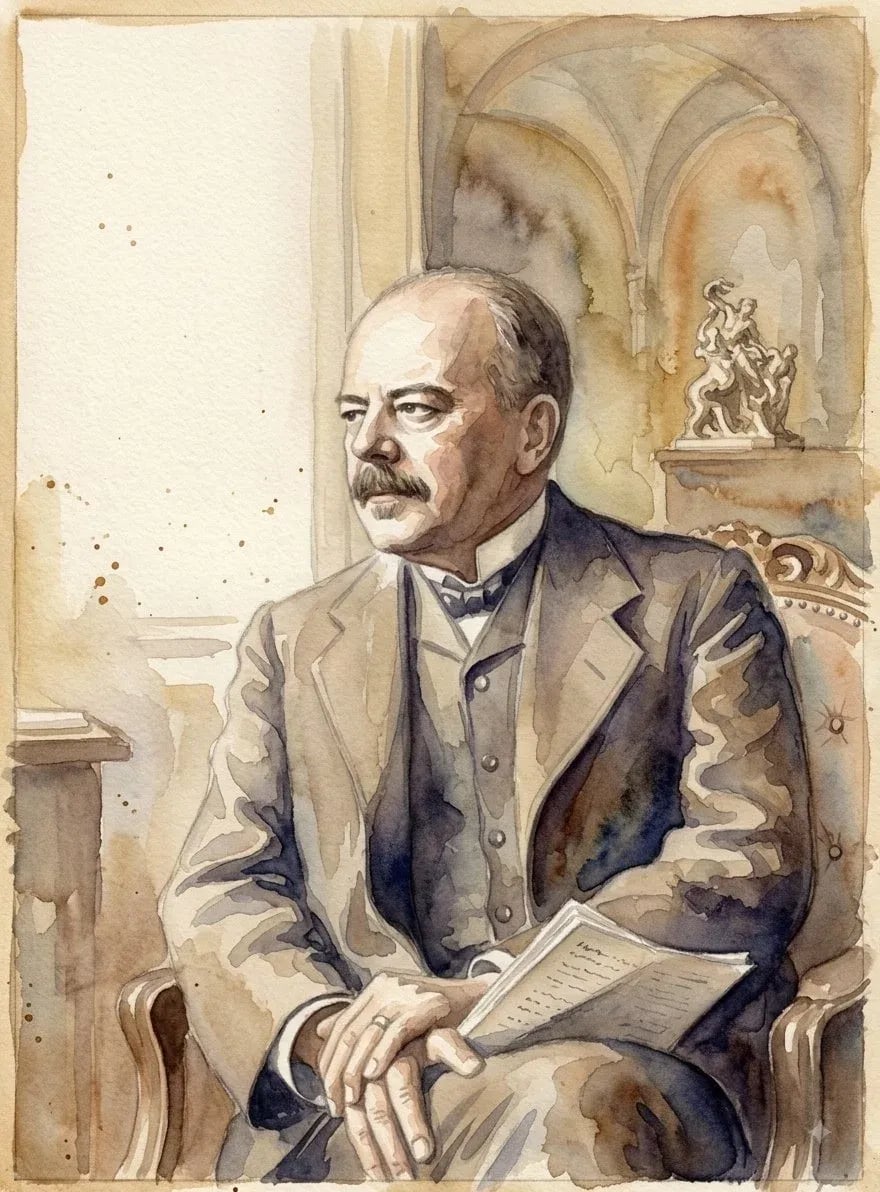
PLATE XII · MIRABAUD
The Evidence
Mirabaud was founded at Geneva in 1819, in the settled years after Napoleon, and passed through seven generations of the same families before converting from a partnership to a corporate form in the present century, as Lombard Odier and Pictet also did. The Gallery treats that conversion as the significant modern event in all three houses, and notes that it is rarely discussed publicly, because it changed what a partner personally stands behind.
Set against seven generations the arithmetic of a modern listed retail broker: in a record year of operating income, marketing consumed something approaching half the entire cost base and net profit fell by a quarter. Nothing was mismanaged. The structure was operating exactly as designed, at the tempo it was designed for.
The Lesson
The unit of measurement is not a cultural preference. It determines the answer to every material question an institution faces. A house measuring in quarters will accept leverage it can service this year and a client it can monetize this year; a house measuring in generations declines both, and looks for several years like the weaker business.
Which is correct depends entirely on what is being built — and that is the decision, made once, that Study No. 05 argued is very nearly irreversible. The error is not choosing the short horizon. It is choosing it by default, through individually reasonable decisions about platforms, jurisdictions and counterparties, and discovering afterwards that the tempo of the institution was set by its vendors. When a house changes its legal form it changes the answer to the only question a client is really asking, which is who loses first — and that answer belongs in the disclosure rather than in the footnotes.
Every house is built to a clock. Very few founders are told which clock they have chosen.
What the House takes
Mandates are designed for the tier the institution intends to occupy in five years rather than the one its present capital can reach, on the House position that these structures do not convert into one another and that each transition is a rebuild financed at the worst possible moment.
What the House asks of the client
That the principal state the horizon explicitly at the outset — build to hold, or build to sell — and that the technology architecture, capital structure, licensing perimeter and distribution model all be tested against that single statement before any of them is procured.
The House Is Built for Those Who Come After
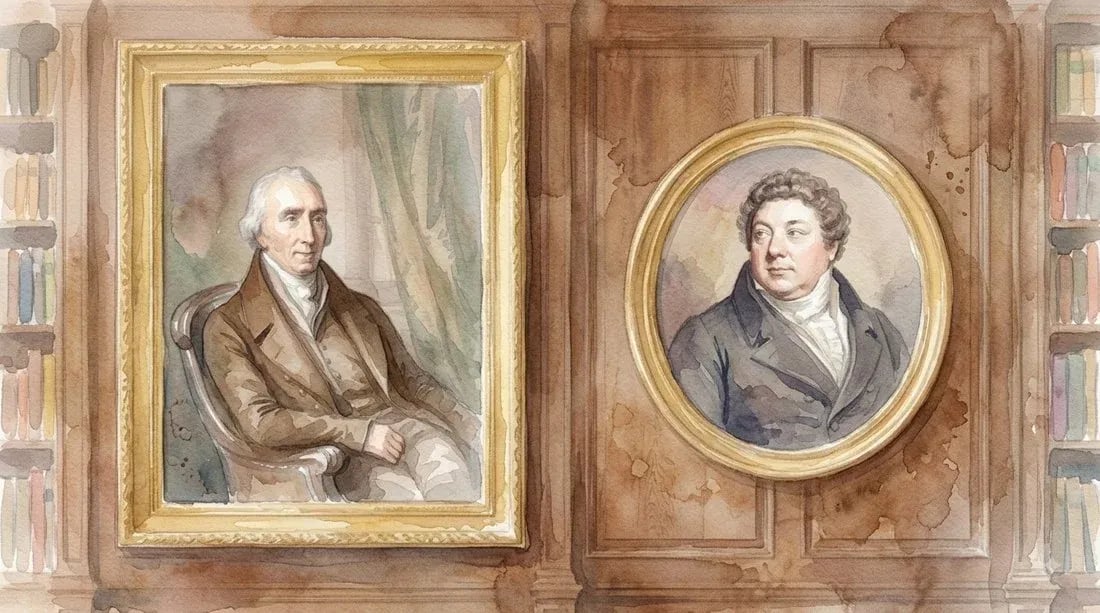
PLATE XIII · LOMBARD ODIER
The Evidence
Geneva in 1796 was a poor place to open a bank: the old banking families had lent their fortunes to Louis XVI and lost them, the export trade had collapsed with the Revolution, and the city would be annexed by France within two years. Henri Hentsch opened a house in silks and commissions on 11 January; his second cousin Jean-Gédéon Lombard joined two years later and the firm was renamed. They fell out, the two lineages traded apart for two centuries, and merged again only in 2002. Across those years the name on the door changed repeatedly, as at every Geneva partnership, because the name was simply the list of the partners then liable. The institution was never the name. It was the deed underneath it.
The Lesson
A house that identifies itself with its current principals must be rebuilt each generation. A house that identifies itself with its constitution need not, and the choice is made at formation and almost never afterwards. This is the lesson that governs the other ten, and the one least available to a founder in the first years, when survival is the whole of the agenda.
Personal liability, refusal, discretion, the seat, the archive, the closed register of owners, the long horizon: not one of these pays for itself inside a founder’s tenure. Each is a transfer from the present generation to a later one, and each is therefore rational only for someone who has decided that the institution matters more than his own return from it.
The motto more than one European banking family borrowed from Virgil states it in four words — sic vos non vobis, thus you build, but not for yourselves.
Build the nest. Do not assume you will live in it.
What the House takes
The doctrine of the House is published rather than reserved. The Keystone is issued to the industry, including to competitors, on the position that a standard which is not public is not a standard. The House builds what it intends to be inherited — by its own successors, and by the institutions it has designed.
What the House asks of the client
That the institution be designed for a successor who has not yet been identified: documented, transferable, legible to an outsider, and dependent on no relationship that cannot be assigned. The practical test is the one an acquirer applies and a founder rarely does — if every person in the building were replaced, what would still be standing?
Exhibit 3 — The Eleven Lessons Across the Houses
| Lessons I–XI | Outcome | |
|---|---|---|
| Berenberg | ● ● ◐ ○ ● ● ● ● ● ● ● | Continuous since 1590 |
| C. Hoare & Co | ● ● ● ○ ● ● ● ● ● ● ● | Continuous since 1672 |
| B. Metzler | ● ● ◐ ○ ● ● ● ● ● ● ● | Continuous since 1674 |
| Rahn+Bodmer | ● ● ◐ ○ ● ● ● ● ● ● ● | Continuous since 1750 |
| Rothschild | ● ● ● ● ● ● ● ● ● ● ● | Continuous; houses variously merged and closed |
| Monte dei Paschi | ○ ◐ ○ ○ ● ● ○ ◐ ● ◐ ● | Continuous since 1472; listed, and state-recapitalized |
| Mitsui | ● ● ● ○ ● ● ◐ ● ● ● ◐ | Continuous since 1673; in a listed group |
| Wegelin & Co | ● ● ○ ○ ● ● ● ● ● ● ◐ | Ceased trading, 2013 |
| Lombard Odier | ● ● ◐ ○ ● ● ● ● ● ● ◐ | Continuous since 1796; converted |
| Pictet | ● ● ◐ ○ ● ● ● ● ● ● ◐ | Continuous since 1805; converted |
| Bordier & Cie | ● ● ◐ ○ ● ● ● ● ● ● ◐ | Continuous since 1844; still unlimited |
| J.P. Morgan & Co | ● ● ◐ ◐ ● ◐ ○ ● ● ◐ ● | Absorbed into a listed group |
| Barings | ◐ ● ○ ○ ● ● ● ◐ ● ◐ ● | Failed in a week, 1995 |
Source: Key: ● documented and continuous · ◐ present in part, or for part of its history · ○ not present. X-CHASE analysis (House Framework). These are directional judgments made against the published record of each house, not survey data, and they describe the prevailing practice of each institution rather than every period of its life.
Room XI read against the eleven lessons: what each house held, and how each ended. Three readings carry the argument of the grid.
- The surviving private houses are almost identical. They did not copy one another — they are separated by centuries, languages and legal systems, and in several cases by open commercial rivalry — and they converge anyway, on practices none of them described as a framework and none of them published. Convergence arrived at independently is the evidence for treating these as conditions of survival rather than preferences of taste, and it is why the House states them as a standard: what unrelated institutions discovered separately over four centuries can be adopted deliberately in a week.
- Lesson IV is the exception, and it is the modern one. Only Rothschild held it in full; the others were single houses in single cities and did not need it. Wegelin, destroyed by a foreign jurisdiction, is precisely the case that separation of capital and of perimeter exists to contain — which is why it is the lesson most often missing from a contemporary design.
- The two houses that failed score as well as the survivors. Barings holds nine of eleven for two centuries; Wegelin holds nine of eleven for nearly three. Neither was saved, because what would have saved them is not an inheritance and does not appear in this table at all. Section XII is about the two columns that are missing.
What the Table Cannot Show
The grid records whether a practice was held, not whether it was still working. Every one of these houses passed through periods in which a lesson held for a century was formally in place and functionally hollow — a partner liable on paper who was not consulted, an archive kept by a clerk nobody read, an independence preserved in the register while control had moved elsewhere. The House therefore treats each of the eleven as a question to be re-asked rather than a box to be ticked.
Nor does it record proportion. Bordier and Gutzwiller hold Lesson I in a house of a few dozen people; Monte dei Paschi does not hold it at all and has outlasted both by centuries. The grid reports what was held, not what it cost to hold, and the second question is the one a principal is actually deciding.
The Two Houses That Ended
PLATE XIV · FRANCIS BARING

PLATE XIV · WEGELIN & CO
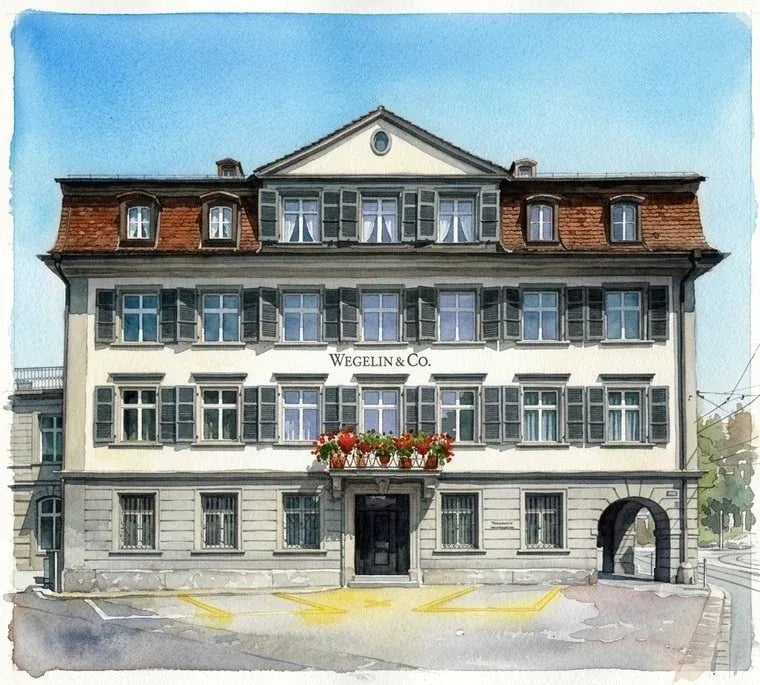
Room XI hangs fourteen houses; twelve are still trading. The two that are not failed in opposite ways, and between them exhaust how a house of this kind is lost.
Barings — The Desk Nobody Was Watching
Francis Baring was the third son of a German wool merchant near Exeter, deaf from youth, apprenticed in London at seventeen. By 1806 the firm bore his name alone. He financed the war against Napoleon, helped arrange the American purchase of Louisiana in 1803, and died in 1810 with the house at the height of its reputation.
A hundred and eighty-five years later it was insolvent. The losses were approximately £827 million, more than twice the firm’s available trading capital, accumulated by a twenty-eight-year-old trader in Singapore who both dealt and controlled the settlement of his own dealing, and who concealed the position in an error account. On 5 March 1995 it was sold for one pound. Two hundred and thirty-three years ended in a week, and the cause was the absence of one control: the independent risk and settlement function drawn as a dashed bar at the foot of Exhibit 5 in Study No. 05.
Wegelin — The Policy the Whole Partnership Stood Behind
Wegelin was founded at St Gallen in 1741 by a linen merchant and became the oldest bank in Switzerland. In January 2013 it pleaded guilty in a Manhattan court to helping American clients conceal at least $1.2 billion from the United States tax authorities, paid $57.8 million in restitution and fines, and announced in the same statement that it would cease to operate as a bank. Two hundred and seventy-two years ended in one plea, over conduct the firm said it had believed lawful under Swiss law at the time.
The Two Shapes of an Ending
Barings failed from one desk nobody was watching — a control that was absent. Wegelin failed from a policy the entire partnership stood behind, right up to the day a foreign court disagreed — a control that was present, functioning, and pointed at the wrong perimeter. The first is a governance failure and the second is a jurisdictional one, and no amount of the first kind of discipline prevents the second.
This section sits after the eleven lessons because they are otherwise capable of being read as a claim that heritage protects. Heritage is accumulated evidence that a structure has worked, and it becomes worthless the moment the structure is altered — which at Barings occurred not by decision but by growth. The question the House puts to every mandate it manages is therefore narrow: which activity here is conducted under a name earned by a different activity, and in whose jurisdiction is it actually conducted?
Age is not a control. Nothing in a house’s history examines the position that will end it.
Exhibit 4 — The Inheritance Register
| The House binds itself by | The client institution must | |
|---|---|---|
| I · Personal liability | Named author and named reviewer on every instrument; a Management Committee signature on every architecture | Place risk authority with a person exposed to it, or manufacture the substitute: an independent risk function |
| II · Character first | Selection precedes terms; the right to decline treated as an asset | Write onboarding and counterparty standards as character tests before price tests |
| III · Refusal | The Three Prohibitions; no economic interest in vendor selection | Name in writing the business it will not accept, before it is offered |
| IV · Separated capital | Mandates, doctrine, and proprietary architecture held in distinct instruments with severed ownership | Be drawn as a group at design: licences with the activity, intercompany channels enumerated and capped |
| V · The record | The Keystone Doctrine Series; series coding; retained source files | Record decisions with their reasons, contemporaneously, under a stated retention policy |
| VI · Discretion & size | The Disclosure and Access Protocol; no unconsented naming; no implied relationships | Separate client information from institutional information — and state the size beyond which it will not grow |
| VII · The seat | Stated legal seat, published address, and disclosed regulatory standing | Choose jurisdiction as a banking and substance decision, not a registration decision |
| VIII · Independence | Closely held and unlisted; alliances by contract, with intellectual property separately owned | Read the capitalization plan as a governance plan; negotiate reserved matters at the first round |
| IX · Succession | Management Committee, named divisional directors, constituted Advisory Council | Name deputies, document authority limits, and settle the shareholders’ agreement early |
| X · Time | Mandates designed for the tier intended in five years, not the tier affordable today | State the horizon explicitly — build to hold or build to sell — before procurement begins |
| XI · Stewardship | Doctrine published rather than reserved | Design for an unidentified successor: transferable, legible, dependent on no single person |
Source: X-CHASE analysis (House Framework). The instruments named in the centre column are published or registered documents of the House and are available on request through the Office of Institutional Intelligence.
Each lesson, the instrument by which the House binds itself, and the requirement placed on the client institution. Read the centre column alone and it is a description of a firm; read the right column alone and it is a specification for an institution. The register exists because the two are the same document written twice, and because a client is entitled to ask the House to produce its own evidence for any line it is being asked to accept.
The register is deliberately symmetrical. Every obligation the House places on a client institution is one the House has first placed on itself, and can be asked to evidence. Where the two columns differ, they differ only in form: X-CHASE is not a regulated institution and does not hold client capital, so several of the client’s obligations have no exact counterpart in the House and are met by the nearest available discipline.
Note also which lessons are absent from the left column. Lesson IV, the separation of capital, binds the House only weakly, because a firm that holds no client money and carries no balance-sheet risk has little to separate. It binds the client institution completely. Asymmetries of that kind are stated rather than smoothed over, on the same principle that governs the rest of this Standard.
On the Status of This Register
The register is a standard of the House and not a contractual undertaking to any client. It describes what X-CHASE will require to see in an architecture it has designed, and what it will record as unmet where a principal declines to adopt it. A design mandate does not fail because a client rejects a lesson in this register; it fails when the rejection is not written down, and the institution is later described as having been designed to a standard it was not designed to.
Where These Lessons Enter a Mandate
A standard that is not attached to a moment of decision is an essay. The eleven lessons of this document are attached to one moment, and it is early: the point at which a principal has decided to establish an institution and has not yet signed anything.
The reason is the finding of Exhibit 3. Every practice in this Standard is a decision about the inside of the firm — liability, ownership, separation of capital, succession, the seat, the record — and each of them is settled, in law and in practice, by documents executed in the first weeks: the constitution, the shareholders’ agreement, the group structure, the licence application, the first vendor contracts. After those, a lesson is not adopted. It is retrofitted, at a multiple of the cost, usually in response to an event.
The Sequence the House Holds To
Design — the eleven lessons are put to the principal as questions, and the answers are written into an architecture the principal owns: the group structure, the liability and ownership arrangement, the licensing perimeter, the banking sequence, the organizational design, and the capital deployment schedule that follow from them.
Launch — procurement begins against that architecture rather than before it. Counterparties are selected on the nine questions of Exhibit 2, and every arrangement is examined for the channel by which its failure would reach the rest of the group.
Management — the eleven are re-asked on a stated cycle, because the answers drift. The founder who was personally exposed at incorporation is frequently not exposed by year three, and the moment at which that changed is almost never recorded.
The House therefore holds that the structural work belongs at the beginning and should be conducted as a discrete, paid, fixed-scope engagement whose deliverable is an architecture rather than an introduction — the drawing board of Standard No. 01, arrived at here from four centuries of banking rather than from the bench. The Blueprint is not offered without charge, and the reason is contained in this Standard rather than in a commercial policy: a design produced at no cost is a design the principal has not been required to own, and an architecture nobody owns is the architecture the vendors will write.
None of this makes the engagement a governance product. The eleven lessons are not sold, and they are not the deliverable; they are the standard against which the deliverable is measured, in the same way that the nine questions of Exhibit 2 are not a service but the terms on which a counterparty is assessed. What a principal receives is an architecture. What this Standard describes is what the House will refuse to put its name to while building one.
The Limit of the Undertaking
X-CHASE is not a regulated institution, holds no client capital, and gives no assurance of any regulatory outcome. It does not undertake that an institution designed to this Standard will succeed, and it does not represent that any of the houses examined here would endorse the reading the House has made of them. What it undertakes is narrower: that the eleven questions will be put before the documents are signed, that the answers will be recorded, and that any lesson the principal declines will be recorded as declined rather than quietly omitted.
The lessons are cheap at incorporation, expensive at the first audit, and unavailable at the first crisis.
What the House Inherits
The old houses are not models to be copied. Their markets are gone, their instruments are obsolete, their legal forms are in several cases unavailable, and their advantages were in part the advantages of a world with fewer competitors and slower news. Nothing in this Standard proposes that an institution founded today should be organized as a Hamburg cloth merchant was organized in 1590.
What they offer is narrower and more durable. They are the surviving record of which institutional decisions absorb error and which transmit it. Every one of the eleven lessons is a decision about the inside of the firm, taken before there was any evidence that it would matter, and maintained at a cost through periods when it plainly did not. That is the whole of the method: the protections were installed while they were cheap.
Nor were their circumstances easier. Each of these houses operated without limited liability, without deposit insurance, without a lender of last resort for most of its life, and frequently without a central bank or an enforceable law of contract across the borders it traded over. They carried more risk than a modern institution carries and they survived it, which is worth stating because the contemporary argument for abandoning these disciplines is almost always that conditions today are unusually demanding. They are not. They are unusually protected.
X-CHASE takes from them a firm’s worth of obligations and one governing proposition: that the structure of an institution is chosen once, by someone, at the beginning — and that if it is not chosen deliberately by the owner of the capital it will be chosen incidentally by his vendors, his platform, his jurisdiction, and his first liquidity agreement. The old houses chose. That is the entire difference between them and the thousands of firms founded alongside them whose names are not recorded anywhere.
Standard No. 01 took its method from houses that make objects; this one takes its conditions from houses that were institutions. The two arrive at the same place from opposite directions, which the House regards as the strongest evidence available that the place is correct.
Nothing in that proposition requires a long history to act upon, which is the only reason a firm of a few years is entitled to publish this Standard at all. The eleven lessons are not the reward of age. They are the conditions of it. Every one of them was available to the houses in this gallery on the day they opened, at a cost they could afford, and the reason so few of their contemporaries survive is not that the conditions were secret. It is that they were expensive at the moment they were cheapest.
The houses that lasted were not the houses that were right. They were the houses that had already decided who would say no.
Design before procurement. Refuse before you are asked. Record before you are questioned. Build for the generation that will not thank you.
The old houses did not last because they were old. They lasted because they decided, early, what they would not become.
Apparatus
A Note on the Plates
Every plate reproduced in this Standard is drawn from The Long Gallery, the permanent exhibition of the House — Exhibition XC·LG·EX-01, Issue 1, August 2026, Section 09, Heritage — and carries its gallery reference in the caption. All are modern watercolour studies belonging to X-CHASE. None is a period work and none carries a period attribution.
Plates XXVII, XLVIII, XLIX, L and LI of the gallery — here Rahn+Bodmer, Monte dei Paschi, Mitsui, Wegelin and Julius Bär — depict the premises of the named house rather than an individual. Plates XXII and XXIII — here Lombard Odier and Pictet — depict no identified individual. Plate XXXIII, Berenberg, is a likeness belonging to a lineage rather than to a single identified founder, the Berenberg, Gossler and Seyler names having entered the partnership across two centuries by marriage and inheritance. The remaining portrait studies were made after the surviving likeness of the sitter named beneath them.
On the Naming of Houses
The fourteen houses of Room XI and the fourteen sitters of Room X are named for historical reference only. None has any connection to X-CHASE; no association, endorsement or relationship is stated or implied; and no third-party mark or house device is reproduced anywhere in this Standard or in the exhibition from which its plates are taken. Where a house is criticized here — and two are — the criticism rests entirely on facts the institution or a court has itself made public.
Why the Plates Are Named at All
An earlier draft of this Standard reproduced these plates without naming their subjects, on the view that a general argument is not improved by particular faces. That was withdrawn. A house that publishes a register and then declines to say what is in it has not exercised discretion; it has declined the discipline of Lesson V while printing the lesson. The plates are named because the gallery names them, and because a document arguing that the record is the institution cannot itself be the exception.
An archive that will not say what it holds is a decoration with a catalogue number.
The Rooms Not Used Here
The gallery holds nine further rooms, and this Standard draws on none of them. They record the objects and systems through which capital passed before there were institutions to hold it: the table in the Athenian agora and the broken bench of the Italian money-changer; the tally stick, the ledger, the bill of exchange and the balance; the tulip, the bubble and the coffee house; the dispatch, the tape and the terminal; the charter, the ring-fence and the gate; the margin call, the queue and the distributed ledger.
They are omitted here because this Standard is concerned with the institution rather than the instrument — with who stands behind the signature rather than what was signed. A companion document taking the first nine rooms as its subject would be a different argument, and a longer one.
A Note on Sources
The Long Gallery. Room X (fourteen sitters) and Room XI (fourteen houses) of Exhibition XC·LG·EX-01 are the source of every house and every sitter named in this Standard, and of the one-line judgment attached to each in Exhibit 1.
Foundation dates and legal forms. Monte dei Paschi di Siena (1472), Berenberg (1590), C. Hoare & Co (1672), Mitsui (1673), B. Metzler seel. Sohn & Co (1674), Wegelin & Co (1741), Rahn+Bodmer Co (1750), Barings (1762), Lombard Odier (1796), Pictet (1805), Brown Brothers Harriman (1818), Mirabaud (1819), Bordier & Cie (1844), E. Gutzwiller & Cie (1886) and Julius Bär (1890) are stated as published by the institutions themselves or as recorded in standard reference works. Descriptions of legal form reflect the position at the date of publication.
The London sales. Goslings into the merger forming Barclays (1896), Coutts to the National Provincial (1920), Child & Co (1924) and Drummonds to the Royal Bank of Scotland (1924) are recorded in published histories of the London private banks.
The 1912 testimony. The exchange between counsel to the Pujo subcommittee of the United States House Committee on Banking and Currency and J. Pierpont Morgan took place in December 1912 and is preserved in the published hearings. The quoted phrase is taken from that record; the remainder is paraphrased.
Wegelin. The guilty plea of January 2013, the concealment of at least $1.2 billion from the United States tax authorities, the $57.8 million in restitution and fines, and the announcement of closure in the same statement are drawn from the published record of the case.
Barings. Foundation in 1762; insolvency declared in February 1995; losses of approximately £827 million against materially smaller available trading capital; sale for a nominal one pound in March 1995. Drawn from published accounts of the collapse and the official inquiry into it.
Companion standard. The Watchmaker’s Standard (XC·FW·ST-01, First Edition, July 2026) is No. 01 of this line and sets out the ten horological practices from which the method of the House is drawn. Where the two overlap, No. 01 governs the method and this Standard the conditions.
House benchmarks. The nine questions at Exhibit 2, the matrix at Exhibit 3, the register at Exhibit 4, and all characterizations of X-CHASE practice are House standards and are identified as such. They are not survey data.
Figures not reproduced. Where a house publishes financial results, this Standard does not quote them. Longevity and profitability are different measurements, and a document arguing that the first is produced by structure would weaken its own case by borrowing the authority of the second. The single financial comparison in the text — the listed retail broker at Lesson X — is made for contrast rather than for ranking.
Standing Disclosure
X-CHASE is an institutional financial systems firm. It is not a regulated financial institution, bank, broker, asset manager or authorized investment advisor, and nothing in this Standard constitutes investment, legal, regulatory or tax advice. Institutions named here are referenced solely as historical and market participants for the purpose of describing institutional structure. Figures and legal forms are stated as at the date of publication; readers must verify against current sources before acting.